
 A Minnesota PBS Initiative
A Minnesota PBS Initiative
In 2010, the FBI raided 23 anti-war activists in an attempt to criminalize dissent. This is the story of one of those 23.
One morning in 2010, my life completely changed. The most important trip and also probably the one that got me into trouble was in 2002 to go to Palestine. It was really hard. My parents really actually believed in intervention and they really believed that we needed more guns and more weapons.
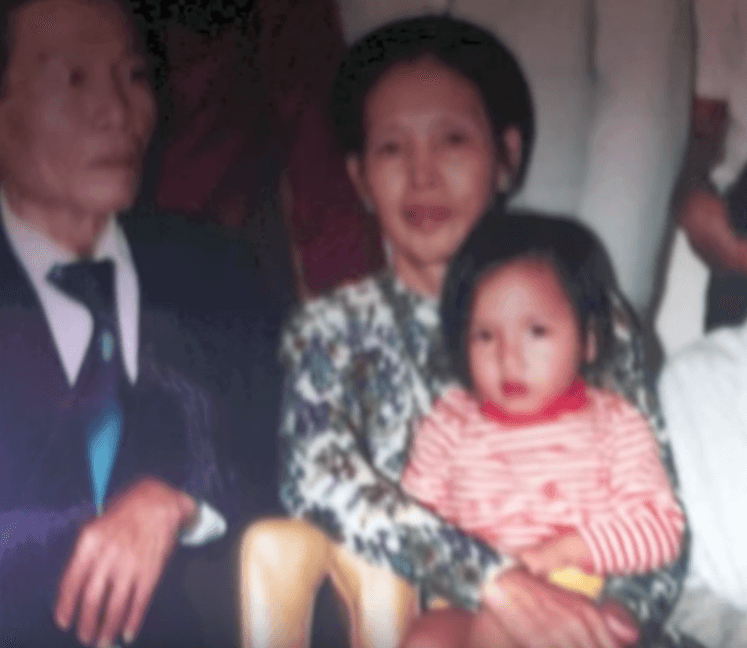
Meanwhile my, I remember, my childhood bedroom was right next to my grandmother’s bedroom and she would have these nightmares because of the war.
My name is Anh Pham and I was born in Saigon, Vietnam right at the fall of South Vietnam and I guess I would mostly identify as Vietnamese-American, and activist, immigrant, feminist.
At home, we never talked about the war, and to me that was a sign in and of itself because the scars of the war, the hurt from the war, touched my family.
Fleeing the U.S. War in Vietnam
When the U.S. war in Vietnam ended literally one morning in April we were told at 10 in the morning that you had a few hours to get on the boat at 1 in the afternoon.
And to make a long story short, most of us got on the boat.
The Lutherans in Minnesota were being told to sponsor these Vietnamese people. So, we were told that we could go to the state called Minnesota, which we had never heard of before, or we could wait indefinitely for a spot in California, so we chose Minnesota.
At home, we never talked about the war, and to me that was a sign in and of itself because the scars of the war, the hurt from the war, touched my family.
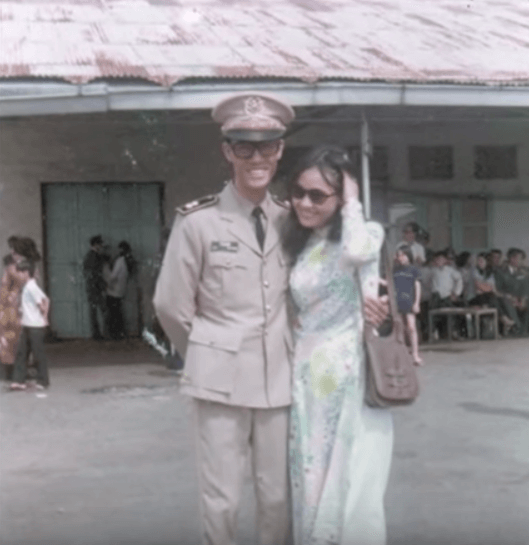
Anh Pham's parents
Protesting the First Persian Gulf
So I was involved in Amnesty International in high school and Amnesty was a group that actually, in my high school, that organized protests around the Persian Gulf War. We were literally just sitting here in the lobby, taking over our school lobby, and everybody who went to school that day could not avoid thinking about it.
The people who were the counter protesters would say things like, “If I could, I would go fight right away.” And it was like they were glorifying this act of war.
As a person whose family was touched very directly, nobody should glorify the act of war. Joining the Anti-War Committee We were moving towards the mid to late 90s and we were looking at intervention in the Persian Gulf again. So I started to go to Anti-War Committee meetings to work around that issue. I think some of the most memorable ones was doing a civil disobedience at the Federal Building where I think we had 73 people to having a march of, I would say, 15,000 people marching onto the capitol. And it was part of a worldwide movement of marches and protests saying we don’t want another war.
Traveling on Solidarity
Delegations With the Anti-War Committee, the most important trip and also probably the one that got me into trouble was in 2002 to go to Palestine. To be able to go into Gaza, to see what really happened, to be able to go into Jenin four months after the massacre, to be in Ramallah and actually see the [Arafat] compound and see what happened. You know, and then shortly afterwards, to see the devastation of September 11th in New York City and to see that, that’s Gaza everyday.
Fighting FBI Repression of the Anti-War 23
One morning in 2010, my life completely changed. Around 7 in the morning, there was a knock at our door, a really loud knock. My husband went downstairs to check on the door and told me that the FBI were there to see me. And so I asked them if they had a warrant, they said they did. Literally searched through everything, underwear drawers, looking for photo albums, books, and nothing was left untouched. And the creepy thing, they knew the layout of our place so it was very clear that somebody had been in my house before and had told them what to look for.
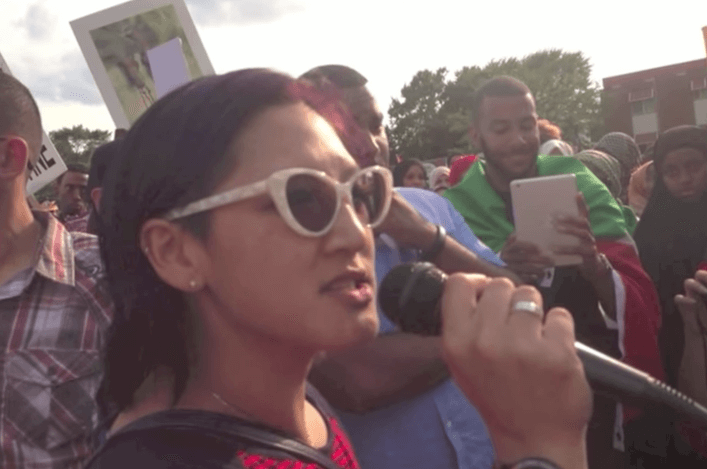
Anh Pham at a protest
But in terms of the process since then, overwhelmingly people stepped up and stood with me and with us. And I’m convinced that so many of us wouldn’t be here today. Literally prepared to have to spend some time in a jail cell for not testifying because there was no way I was going to give them any information, because there was no information.
Reflecting and Moving Forward
But that trip is one of the most important things I’ve ever done in my life and I don’t regret it for a minute. All of this ugliness that’s happening, you know with what’s happening with Rasmea, with what’s happening in Gaza, to still see the laughter and the spirit of the people in Palestine.
That’s why we have to keep working.
When I’ve met Vietnamese people from Vietnam, and they’re just like, we knew that in the belly of the beast we have sisters and brothers as well. And that means a lot to me, that internationally all around the world we are a sisterhood, we are a brotherhood of people who are standing for human rights.
Submitted From: Minneapolis, MN

Primary Location During Vietnam: Saigon, Vietnam 
Story Subject: Immigrant
Produced by Sophia Hansen-Day. Thanks to Anh for sharing her story.
This story is part of the Immigrant Stories collection. Immigrant Stories invites immigrants, refugees, and their families to create digital stories about their experiences. Each story is preserved in the Immigration History Research Center & Archives at the University of Minnesota, where we have collected materials related to immigration in the U.S. since 1965.
Story Themes: Boat, Feminism, Immigrant Stories, Lutherans, Protest, Vietnamese